Executive Director’s Message
It’s hard to believe it’s already April — it feels like we were just ringing in the new year. The year has already brought major change to New Jersey, with Governor Mikie Sherrill making energy affordability a top priority. Her administration is expanding our solar goals and has announced a new task force on nuclear energy.
As energy bills rise, at home and at the pump, we’re all feeling the strain. Now is not the time to pull back from renewable energy. It’s the time to double down and lay the groundwork for a renewable energy future.
Below, you’ll find highlights of our recent work: pushing back against dangerous rollbacks that would put workers and communities at risk of chemical disasters, standing with allies to protect funding for the U.S. Chemical Safety Board, and partnering with the Healthy Schools Now coalition to secure funding for public school construction and ensure our schools are free from mercury hazards.
I also want to take a moment to thank you for being part of WEC. These are challenging times. As corporate greed rises, environmental protections are threatened, and workers’ rights face ongoing attacks, our collective voice matters more than ever. Because of members like you, we can defend hard-won protections and advance bold solutions for New Jersey’s communities.
Whether you’re renewing your membership or considering joining for the first time, your support comes at a critical moment! We are continuing to build strong partnerships across labor, environmental, and community groups because real change happens when we stand united.
P.S. Our strength comes from our members and the broad, diverse coalition we’ve built together. If you haven’t yet renewed—or are able to give a little more — your support helps grow this movement and ensures we can continue fighting, together.
In Solidarity,
Debra Coyle


Governor Sherrill Aims to Address Energy, Affordability, and Fiscal Responsibility in First Two Months
Governor Sherrill took office at the end of January and even before the end of her inaugural address signed multiple executive orders to begin trying to address the energy and affordability crisis in the state. Among the executive orders signed since day one, Sherrill directed the Board of Public Utilities (BPU) to expand battery storage and solar solicitations in order to take advantage of their relatively quick development timetable to help stabilize rates by getting more energy supply on the grid.
Additionally, she aimed to provide direct ratepayer relief and work across government to reduce red tape and overbearing regulations that can slow down projects and add millions in costs.
The BPU has already made good on the first steps to executing the solar and energy storage directive by approving state support for 355MW of storage across three projects and announcing another solicitation of over 600MW of storage that can be combined with solar production. Combined, this program will put roughly 1GW of needed, reliable energy supply onto the grid.
The other two executive orders are also being worked on inside the government and WEC along with our partners are closely watching the results. Both have good potential, but also present risks such as diverting funds from important other clean energy initiatives to provide short term cash payments or relaxing environmental and labor regulations that protect communities in the name of efficiency that allow for controversial projects to move forward.
Sherrill has also announced her proposed budget, the first major policy document of her young administration. In the budget, she aimed to differentiate herself from the prior administration and is focused on working towards getting the state’s fiscal house in order. New funding for major projects is largely not on the table, which means we will need to find creative ways to generate new money for underfunded, big-dollar programs such as school construction (more, good news on that below). Additionally, it means we are watching closely and prepared to defend against diversions from important clean energy initiatives from sources like the Clean Energy Fund and the RGGI program, which have been targeted in the past.
Governor Sherrill’s first few months have been eventful, and she is working to fulfill campaign promises around affordability and energy. WEC is excited to work with her administration on the policies that advance pro-worker and clean energy projects to begin to address the root causes of affordability in the state, but also prepared to take principled stands in opposition if her initiatives aim to reach their goals by sacrificing labor, community, or environmental protections that resulted from hard won fights over decades. Now more than ever, New Jersey needs to be a bastion of sensible, effective policy that creates good paying jobs and protects our communities and environment, and we will continue to advocate for that goal.
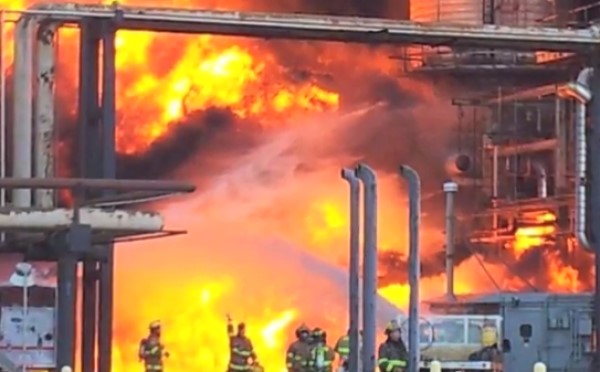
EPA Moves to Roll Back Critical Chemical Safety Protections
The EPA has proposed weakening key provisions of the 2024 Safer Communities by Chemical Accident Prevention rule, which was designed to reduce risks from hazardous chemical facilities. The rollback would scale back critical safeguards for workers, first responders, and nearby communities—including safety planning, worker protections, and public access to information.
With over 11,000 facilities covered by the Risk Management Program and millions of Americans living in high-risk zones, these changes could increase the likelihood of chemical accidents and put communities at greater risk.
The proposed rollbacks will harm workers, first responders, and communities across the nation by eliminating or weakening requirements for facilities to:
- Explicitly consider and plan for risks of “natural hazards” like hurricanes, flooding, and wildfires.
- Assess the availability of safer technologies and other safety measures for all but a small set of new processes.
- Assess practicability of safer technologies or other safety measures.
- Adopt safer technologies or other safer measures, with some exceptions.
- Document and report declined recommendations to address natural hazards, power loss, and siting, or to bring facilities up to current codes and standards.
- Provide certain chemical hazard information in multiple languages to affected communities.
- Ensure backup power for equipment to monitor chemical releases.
- Conduct third-party safety audits after one chemical incident.
- Provide for worker/union participation through employee training; anonymous reporting; consultation rights during hazard analyses, compliance audits, and incident investigations; and stop work authority.
- Ensure a community notification system when one does not exist or is inadequate.
Rolling back these provisions isn’t a regulatory adjustment — it is removing the human safeguards that stand between a near-miss and a mass casualty event.
WEC and advocates are urging the EPA to maintain the stronger protections and keep the current implementation timeline to ensure communities remain safe.
Submit a comment to EPA on this proposed rule here by May 11 and tell EPA to keep the Biden Era rule in place with the current implementation timeline. Contact Debra Coyle at dcoyle@njwec.org for more information.
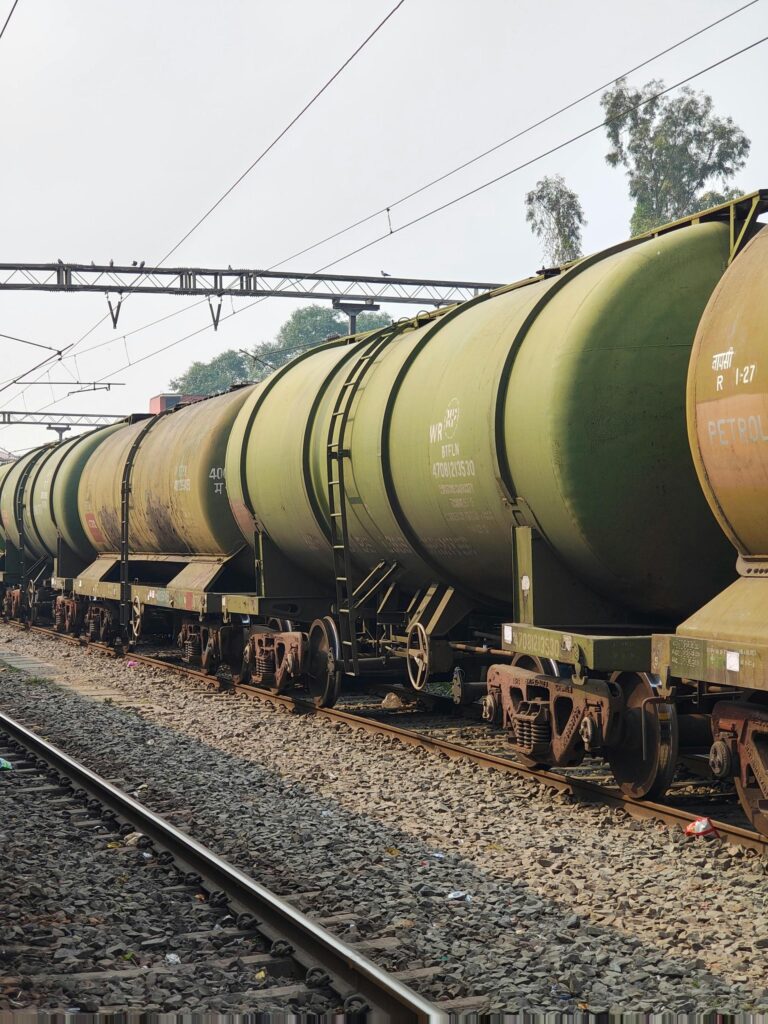
Labor, Environmentalists, and Community Groups Applaud Action to Make NJ Rail Safer Despite Heavy Industry Opposition
In the final week of his administration, Governor Murphy signed S-3389, which creates some of, if not the strongest, regulations on railroad operators in the country. Under the new law, rail companies transporting hazardous materials will be required to have two-person crews on all trains, take active measures to install wayside detectors, submit bridge condition reports to the state, and allow for worker inspections at facilities.
“This is a proud day for railroaders, for our families, and for the communities we serve,” said Ron Sabol, NJ State Legislative Director for SMART-TD. “This legislation delivers meaningful safety improvements for railroad employees, passengers, and communities across New Jersey. We are deeply grateful to Governor Murphy for his leadership and his unwavering commitment to making our state safer. From day one, he has understood that stronger safety standards protect workers and the public alike, and his consistent support for SMART-TD over two terms has made a lasting difference. That legacy will endure well beyond today.”
These measures were supported by a diverse coalition of stakeholders including labor unions, environmental groups, and community members who live near railroad tracks. While advocates and experts pushed for even greater regulation in the aftermath of multiple major accidents in recent memory, including in East Palestine, Ohio (2023) and Paulsboro, New Jersey (2012), the steps taken by the state have been called common sense actions that will decrease the likelihood of a catastrophic event. These measures are especially important given the inaction at the federal level.
“For more than a decade, WEC has partnered with allies to advance comprehensive rail safety reforms, and this new law marks an important first step toward reducing the risk that emergency responders, communities, and rail workers will face another catastrophic derailment like those in East Palestine or Paulsboro, said Debra Coyle, Executive Director, NJ Work Environment Council. “We are grateful to the bill’s sponsors and the Governor for standing firm against well-funded opposition and choosing to do what is right for the people of New Jersey.”
Railroad companies have lobbied against any additional safety regulations and while successful at the federal level, but were unable to kill this bill in Trenton.
Congress Preserves Chemical Safety Board Funding Amid Ongoing Risks
The U.S. Chemical Safety and Hazard Investigation Board (CSB) will continue operating in FY2026 after Congress rejected a proposal to eliminate the agency. In February, Congress provided roughly $14 million in funding. While this preserves the CSB’s critical role investigating chemical incidents and protecting workers and communities, its long-term future is uncertain. It has been a target for elimination by the Trump Administration before. CSB funding has remained essentially flat over the past five years, hovering around $13–14 million annually, with only modest increases and recent slight declines.
To put the critical work of the U.S. Chemical Safety and Hazard Investigation Board in context, more than half of the U.S. population—177 million people—live within the potential worst-case scenario zone of a chemical disaster. One in three children attends school within a vulnerability zone of one or more hazardous chemical facilities. Since its inception in 1998, the CSB has investigated incidents resulting in over 200 deaths, 1,200 injuries, and widespread property and environmental damage.
WEC strongly supports increased funding for the CSB to ensure it has the capacity to conduct thorough investigations and help prevent future disasters. A fully funded CSB is essential to protecting workers, communities, and public health.
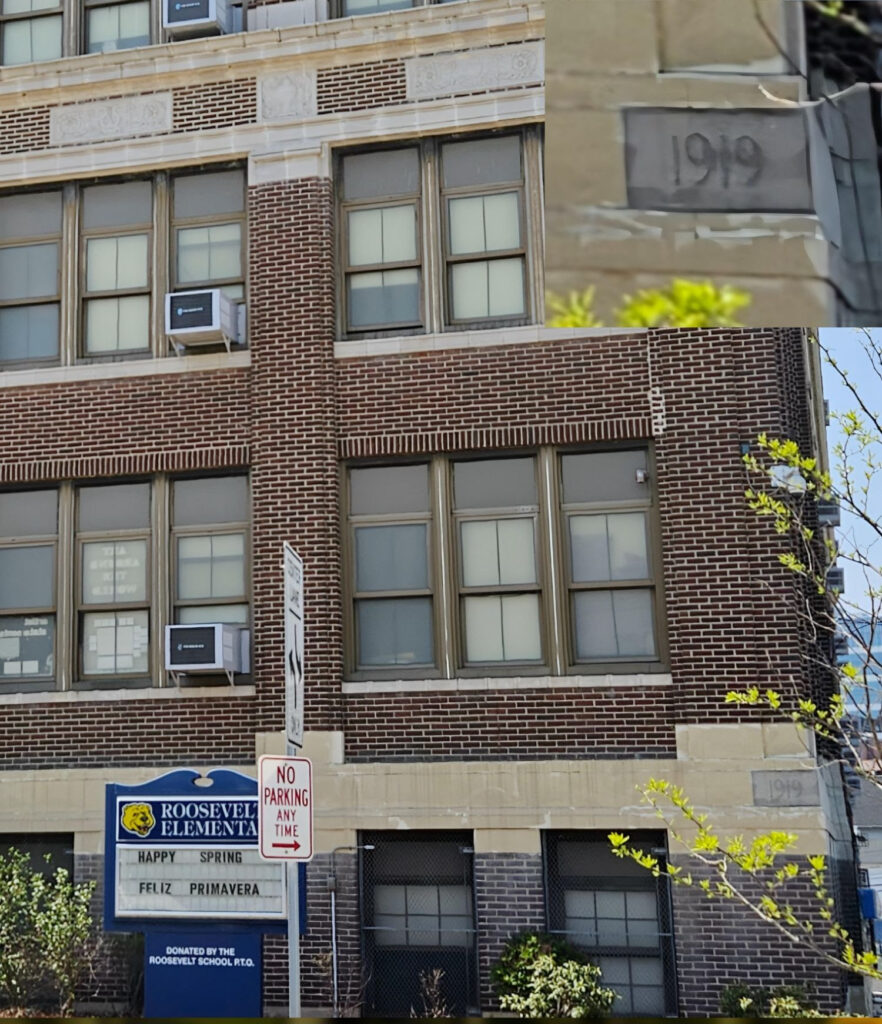
School Construction Bonding Authorization Bill Introduced
On February 9, Senator Majority Leader Theresa Ruiz introduced bonding legislation to address the state’s growing school infrastructure backlog. The bill would authorize $7 billion for Schools Development Authority Districts (formerly Abbott Districts) and $3.5 billion for regular operating districts — subject to voter approval.
The urgency is real. New Jersey has some of the oldest school buildings in the nation, and students and staff are spending their days in facilities deteriorating from age and deferred maintenance—failing HVAC systems, poor ventilation, broken plumbing, and, in some cases, asbestos risks. Every district in the state has, or will have, facility needs, and SDA funding allows the state to share the cost of these expensive projects, easing the burden on districts and local taxpayers.
Unhealthy schools can lead to asthma, allergies, headaches, fatigue, nausea, rashes, and chronic illnesses; more medication use by children and staff; learning and behavior difficulties; greater liability for school districts; and lower achievement. Asthma is the leading reason why children are absent from school, and chronic absence is a major reason why students fall behind. According to the national Healthy Schools Network, 60% of children suffer school-related health and learning problems. Asthma is also a leading work-related disease of teachers and custodians.
WEC greatly appreciates Majority Leader Ruiz’s advocacy for our schools and for introducing a bill to address this important public health issue. This legislation represents a critical opportunity to make long-overdue investments in the health, safety, and success of New Jersey’s students and educators. Safe, healthy school facilities are foundational to strong communities and a thriving future. To get involved, contact Nikki Baker, WEC’s Healthy Schools Now Organizer at nbaker@njwec.org.
Jessie Gomez, reporter from Chalkbeat Newark has been reporting on the need for healthy schools for years. Read Jessica’s latest pieces on School Construction Bonding Authorization bill and Conditions in Newark’s East Ward schools.

Saturday, May 30 | 10:00 AM – 2:00 PM
Registration and light breakfast begin at 9:30 AM
Register Here
Tickets are free
Location
The Contemporary, 176 West State Street, Trenton, NJ 08608
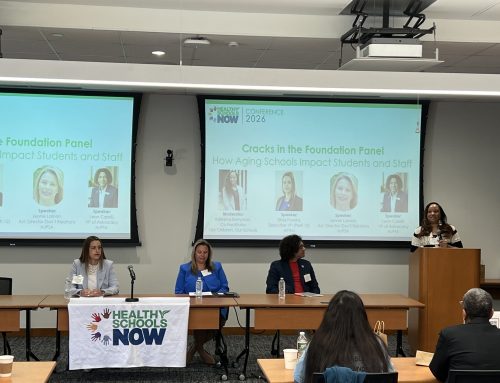
The conference will bring together education leaders, policymakers, advocates, and community members to highlight the challenges students and educators face in aging and deteriorating school buildings and to explore strategies for creating safer, healthier, and more modern learning environments. Investing in our school facilities is an investment in stronger communities and greater opportunity for the next generation.
Register now to join us on May 30th to learn how you can be part of Building Our Future Together.
Speakers are to be announced, and sponsorship opportunities are available.

Mercury Free Floor Bill Moves to Governor’s Desk
The Senate and Assembly passed legislation (S-1370/A-1514) sponsored by Senator Lagana and Assemblyman Calabrese that would require new flooring installed in schools, community centers, and childcare centers to be certified mercury-free, strengthening protections against harmful mercury exposure for children, families, and staff. This is a step forward for public health and a win for the Healthy Schools Now coalition that WEC leads.
Some older polyurethane floors were made with phenyl mercuric acetate (PMA), which can break down over time and release odorless, colorless mercury vapor. Since mercury vapor is invisible and odorless, it can go undetected without clear standards and testing. Mercury exposure is a serious public health concern—especially for young children and pregnant women.
Since 2017, Healthy Schools Now, NJ Work Environment Council (WEC) and NJEA have worked closely to raise awareness regarding the dangers of rubber-like polyurethane floors which were installed using a mercury catalyst. Due to the astute WEC Industrial Hygiene team, this little-known hazard gained attention because of a technical assistance request regarding removal of a gym floor and disposing of it of hazardous waste. The team investigated it and because of all of our efforts, NJ Department of Health issued guidance on evaluating and managing mercury floors (2020), the NJ Schools Development Authority required new floors installed be certified mercury free (2019) and tested the floor they installed (2020) and now legislation is moving and we believed poised to be signed this session.
Learn How to Use
“Right-to-Know” Laws to Protect Your Community
Do you know what hazardous chemicals are present in your workplace or neighborhood? In New Jersey, you have a legal right to know—and the tools to act.
Join us for hands-on training on how to use the New Jersey Worker and Community Right to Know Act and related public data to identify risks, reduce exposure, and protect workers and communities.
Who Should Attend:
Workers and union members
- Community residents and environmental justice advocates
- Public health and environmental organizations
- Anyone concerned about toxic exposure in New Jersey
Register for an online training webinar to learn more.
April 28, 10am – 11am – registration
May 13, 4pm – 5pm – registration
May 28, 12pm – 1pm – registration
New Jersey Work Environment Council (WEC)
172 W State Street
Trenton, NJ 08608
609.882.6100 | info@njwec.org